THC gummies vs drinks use cases is not a “which is better” debate. It’s a “what do you want to feel, when, and for how long” question. Here’s why this matters right now: U.S. adults keep shifting from smoke to “measured” formats, and beverages are the fastest-growing subcategory in many legal markets. In Canada, edibles and extracts represented ~11% of legal cannabis sales in 2023(Statistics Canada, 2024), signaling a steady consumer base for gummies. Meanwhile, beverage makers keep chasing faster onset and more predictable experiences via nanoemulsions and improved flavor tech.
In this guide, you’ll learn how gummies vs beverages THC goals differ, how to pick based on timing and context, what 2026 trends are changing the game, and practical scenarios you can copy paste into real life.
Why format matters: your body processes gummies and drinks differently?
People talk about “edibles” like they’re one thing, but the deliverychanges the ride. Gummies usually behave like classic edibles: THC is absorbed through digestion and then processed by the liver, where it’s converted into 11-hydroxy-THC, a metabolite often associated with stronger and longer-lasting effects.
Drinks can be different. Many modern cannabis beverages use emulsification (often nanoemulsion) to disperse cannabinoids in water, which can increase consistency and may speed up perceived onset compared with traditional fat-based edibles. That said, beverage onset is still highly variable and depends on formulation, your stomach contents, and your individual metabolism.
Onset and duration benchmarks (what most people experience)
Benchmarks vary by person and product, but as a rule of thumb:
Industry education resources commonly cite edible onset around 30 to 120 minute with effects lasting 4 to 8+ hours(NIDA, 2024). Those ranges are broad, but they’re useful for setting expectations and avoiding the classic “I took more too soon” problem.
Why your stomach changes everything
If you take gummies on an empty stomach, effects may arrive faster but can also feel spikier. With a heavier meal, onset may slow, and the experience can feel smoother. Drinks can feel more “timed” in social situations because you naturally sip, pause, and calibrate, but a beverage with sugar, acids, and flavoring can still hit unpredictably if you chug it.
THC gummies vs drinks use cases: the quick decision framework
If you only remember one thing, remember this: choose gummies for duration and bedtime arcs; choose drinks for pacing and social control. Most consumers aren’t picking a format, they’re picking a schedule.
Pick drinks when your goal is “fast feedback and flexible pacing”
One data point worth anchoring on: a large national survey found that 17.7 million Americans reported using marijuana edibles in the past year(NSDUH, 2022). That scale tells you why both gummies and drinks are fighting for shelf space and why brands keep optimizing for specific “moments.”

Comparison table: gummies vs beverages THC goals by real-life situation
Use this like a cheat sheet. It’s not medical advice, it’s a practical way to match cannabis format preferences to the moment you’re actually in.
|
Goal / situation |
Best fit |
Why it works |
Practical dosing tip |
|---|---|---|---|
|
Sleep and staying asleep |
Gummies |
Longer duration tends to align with overnight needs |
Start 2.5–5 mg THC, wait 2 hoursbefore adding more |
|
Social hang, replacing alcohol |
Drinks |
Sipping supports pacing and “check-ins” |
Choose 2–5 mgper serving; sip over 20–30 min |
|
“I want to feel it sooner” |
Drinks(often) |
Emulsions can feel quicker than classic edibles |
Do not stack doses for 60–90 min |
|
Long movie, long game night |
Gummies |
Fewer redoses, consistent arc |
Take 45–90 minbefore you want peak effects |
|
Microdosing while staying sharp |
Drinks |
Small sips help you stay in the “1–3 mg” lane |
Track total intake; cap at a planned number |
Practical dosing strategies that actually reduce bad experiences
Most “bad edible nights” are not about THC being evil. They’re about timing mistakes and stacking doses. The best practice in 2026 is still painfully simple: start low, go slow, and write it down.
A simple template you can use tonight
Why “serving size” isn’t always “dose clarity”
Edibles are often sold as multi-serving packages. Drinks may be single-serve or multi-serve, and the label may show THC per can, per bottle, and per serving. Make sure you’re reading the one that matches what you’re consuming.
In the U.S., many regulated markets commonly cap edible servings at 10 mg THC(limits vary by state). In Canada, edible packages are capped at 10 mg THC per packageunder federal rules (Government of Canada, Cannabis Regulations, in force since 2019; actively enforced through 2026). That regulatory structure is one reason Canadian gummies often skew lower-dose per pack while U.S. packs can vary dramatically by state.
Situational THC use: real-world “choose your format” scenarios
Here’s where edible vs drink format becomes real. These scenarios map directly to how consumers actually use cannabis in 2026: intentional, ritual-based, and often as an alternative to alcohol.
Scenario 1: “I’m going out, I want to vibe, and I don’t want to overshoot”
Pick a drink.You can sip, pause, and match the room. If you’re new, look for 2 mg to 5 mg THC options and avoid stacking with shots of anything else, including extra THC.
Pro move:Alternate with water. It slows your pace and helps you stay calibrated.
Scenario 2: “I want a deep couch-lock movie arc”
Pick a gummy.It’s easier to set a dose, wait, and let the experience build. Take it 45 to 90 minutes before the movie if you want it peaking mid-feature.
Pro move:Pair with a light snack, not a heavy meal, to avoid the “delayed surprise peak” at hour three.
Scenario 3: “I’m cannabis-curious, anxious about being too high”
Pick a low-dose drink or a 2.5 mg gummy. The win condition is not “feeling it a lot.” The win is “learning your response.” New consumers often do better with predictable, measured low doses.
Public health guidance emphasizes the importance of waiting before taking more, because edible effects are delayed (CDC, 2024). Make waiting your superpower.
Scenario 4: “I want sleep, but I can’t be foggy tomorrow”
This one is tricky. Gummies can support longer sleep windows, but they can also increase next-day grogginess if you dose too high or too late. Consider a lower-dose gummy earlier in the evening rather than a bigger dose right before bed.
Edge case: If you’re sensitive to edibles, drinks can let you stop earlier, but they may not last as long through the night.

What’s changing in 2026: trends shaping cannabis format preferences
May 2026 is all about precision and predictability. Consumers want repeatable experiences, and regulators want fewer overconsumption incidents. That pressure is reshaping both gummies and drinks.
Trend 1: Faster-onset beverage tech is getting normalized
Nanoemulsions and other solubility systems are now mainstream for beverages in legal markets. The practical impact is less about “instant high” marketing and more about tighter onset windows when executed well. Brands are also improving stability so THC doesn’t separate, which historically created “hot spots” in some early products.
Trend 2: Low-dose is no longer niche
Microdosed products are winning because they fit work-life balance and social settings. This matches broader category behavior: in alcohol alternatives, consumers prefer controllable, sessionable options. Cannabis drinks slot into that ritual naturally.
Trend 3: Label literacy and compliance are becoming competitive advantages
In 2026, the brands that win are the ones that make dosing obvious. Clear THC-per-container labeling, QR-linked lab results, and batch consistency are not “nice to have,” they are trust builders.
Trend 4: Market sizing and consumer interest remain strong
Even with market volatility, consumer demand is real. Grand View Research estimated the global cannabis edibles market at USD 11.5B in 2023and projected rapid growth through the decade (Grand View Research, 2024). Beverages are taking a bigger slice of that edible universe as distribution improves and taste gets better.
Common mistakes to avoid (and pro tips that actually work)
Mistake 1: “I don’t feel it” re-dosing too early
This is the top reason people have a rough night. Gummies especially can take longer than you think, and your second dose may collide with the first dose’s peak.
Mistake 2: Mixing formats without a plan
Stacking a gummy and a drink can turn “chill” into “why is time melting.” It can be fine for experienced users, but don’t do it when you’re still learning your baseline.
Mistake 3: Not accounting for THC plus other cannabinoids
Some gummies and drinks include CBD, CBG, or minor cannabinoids. CBD may reduce some THC side effects for some people, but results vary and are not guaranteed.
Mistake 4: Treating beverages like beer (speed and quantity)
Chugging a THC drink because it tastes good is how you accidentally time-travel. Sipping is a feature, not a vibe-kill.
Mistake 5: Buying based on flavor alone
Taste matters, but so do lab testing, consistent dosing, and clear labeling. You’re not shopping for candy, you’re shopping for an experience.
How to choose your “ideal” format in under 60 seconds?
Here’s the fast checklist. It’s basically situational THC use in algorithm form.
Best practice: Your first three sessions should be “boring on purpose.” Same format, same dose, same context. That’s how you learn what your body does.
Conclusion
Gummies and drinks are two different tools for two different missions. When you match the format to your timing, setting, and tolerance, you get more fun and fewer “oops.”
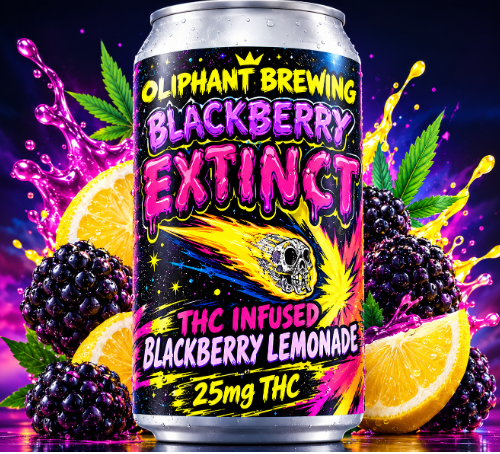
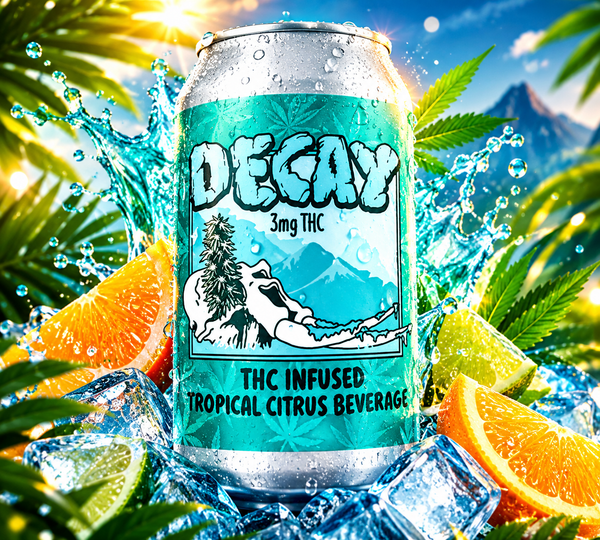
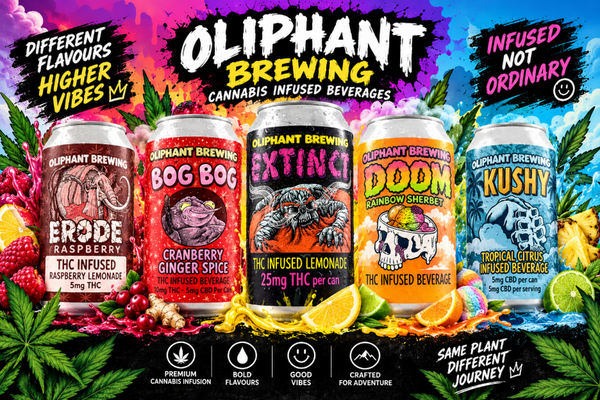
If you want help picking a drinkable THC experience that fits your vibe, your schedule, and your tolerance, talk to Oliphant Brewing. We make cannabis-infused beverages for people who want bold flavor, clean dosing, and a night you actually remember.
Contact us for product questions, availability, and serving guidance in your market.
Frequently asked questions
Q1: What are the best THC gummies vs drinks use cases for beginners?
Beginners usually do best with low-dose products in either format. Drinks can be easier to pace because you sip, while gummies are simpler for one-and-done dosing. Start around 2.5–5 mg THC and wait long enough before taking more.
Q2: How long do THC drinks take to kick in compared to gummies?
Gummies commonly take longer because they rely on digestion, often landing in the 30–120 minute range (NIDA, 2024). THC drinks, especially emulsified ones, can feel faster for some people, but onset can still be variable. The safest move is to wait 60–90 minutes before adding more.
Q3: Why do gummies feel stronger than drinks sometimes?
Gummies are more likely to behave like classic edibles where THC is metabolized in the liver into 11-hydroxy-THC, which many users report as more intense and longer lasting. Drinks may feel lighter if you sip slowly and stop early. Dose, formulation, and your stomach status can flip this either way.
Q4: Which is better for sleep: THC gummies or THC beverages?
Gummies often fit sleep goals because the effects can last longer. Drinks may be helpful for winding down, but they may not carry as long through the night. If you get next-day grogginess, reduce dose and take it earlier in the evening.
Q5: Can I mix a THC drink and a gummy in the same night?
You can, but it increases the risk of overdoing it because onset timing overlaps and peaks can stack. If you mix, keep the total THC low, space doses out, and track what you took. New users should avoid mixing until they know their baseline response.
Q6: What’s the best format for replacing alcohol socially?
THC drinks usually win for alcohol-replacement rituals because they look and feel like a social beverage and support pacing. Choose a low-dose option and sip slowly, especially if you are used to drinking alcohol faster. Plan your ride and don’t combine with alcohol if safety is your priority.
Q7: How do I choose the right dose for situational THC use?
Pick your goal first, then pick your “cap” for the night. For many cannabis-curious adults, 2.5–5 mg THC is a reasonable starting point, and you should wait long enough to evaluate before adding more. Logging dose and time for a few sessions helps you dial in consistency.
Q8: Do THC beverages hydrate you like normal drinks?
They can contribute to fluid intake, but they are not “hydration products” by default. Some contain sugar, acids, or caffeine, which changes how they fit your routine. Treat them like a functional beverage and still drink water normally.
Q9: Are gummies or drinks more predictable in 2026?
Both can be predictable if they’re well-made and clearly labeled, but drinks are improving fast due to better emulsification and stability tech. Gummies have the advantage of straightforward dosing per piece, while drinks can vary if consumers misread per-serving vs per-container. Always verify THC per serving and total THC.
Q10: What should I do if I took too much THC from gummies or a drink?
Stay calm, hydrate, and move to a quiet, safe environment. Avoid driving, and consider food if you have not eaten. If symptoms feel severe or you are concerned, contact local medical help or poison control for guidance.