THC seltzer formulation refers to the structured scientific and engineering process of creating a stable, carbonated beverage infused with tetrahydrocannabinol (THC). It combines food science, colloidal chemistry, and beverage engineering to ensure consistent dosing and a stable drinking experience.
Unlike traditional beverages, THC-infused seltzers require advanced formulation strategies because cannabinoids are naturally oil soluble and do not mix easily with water-based systems. This makes emulsification and stability control essential to the entire process.
The goal is to achieve uniform distribution of THC, long-term stability, and a clean sensory profile without separation or degradation.
Scientific Foundations of Cannabis Beverage Formulation
Cannabis beverage formulation is built on multiple scientific disciplines including:
- Colloid chemistry
- Organic chemistry
- Food engineering
- Fluid dynamics
- Sensory science
THC is hydrophobic, meaning it repels water. Without intervention, it will separate from aqueous solutions. This is why emulsification systems are essential in modern beverage development.
Formulators must also consider pH, ionic strength, temperature sensitivity, and carbonation pressure, all of which influence final product stability.
Chemistry of THC in Aqueous Systems
THC behaves as a lipophilic compound, meaning it prefers oil-based environments. In water, it can exist in three states:
- Free oil droplets (unstable)
- Emulsified droplets (semi-stable)
- Nano-dispersed particles (highly stable)
Modern THC seltzer formulation aims to achieve nano-dispersed systems to improve:
- Bioavailability
- Stability
- Consistency
- Appearance
Surfactants help stabilize these systems by reducing interfacial tension between oil and water phases.

Role of Emulsification in Beverage Stability
Emulsification is the process of breaking THC oil into microscopic droplets and dispersing them evenly in water.
Two main techniques are used:
- High-shear mixing
- High-pressure homogenization
Stability depends on:
- Droplet size distribution
- Electrical charge balance (zeta potential)
- Viscosity of the liquid system
- Surfactant efficiency
Without proper emulsification, THC will separate, float, or degrade over time.
Understanding THC Emulsion Quality
THC emulsion quality directly impacts beverage performance. High-quality emulsions provide:
- Even THC distribution
- Long-term stability
- Consistent potency per serving
- Improved absorption efficiency
Poor emulsions may result in:
- Sedimentation
- Phase separation
- Inconsistent dosing
- Reduced shelf life
Testing methods include microscopy, centrifugation, and particle size analysis.
Beverage R&D THC: From Concept to Prototype
Beverage R&D THC refers to the development process where formulations are created and refined before production.
This includes:
- Ingredient selection
- Prototype development
- Sensory evaluation
- Stability testing
- Process optimization
Each iteration helps refine taste, texture, and cannabinoid performance.
Ingredient Engineering in THC Seltzers
Ingredient engineering ensures all components function together effectively.
Typical ingredients include:
- THC extract
- Emulsifiers
- Flavor systems
- Acid regulators
- Water base
- Optional sweeteners
Each ingredient must be compatible with both cannabinoids and carbonation systems.
Functional Roles of Additives and Stabilizers
Additives are essential for ensuring product stability.
They help:
- Maintain emulsion integrity
- Control pH levels
- Improve flavor balance
- Extend shelf life
- Enhance mouthfeel
For example, citric acid stabilizes acidity while improving flavor brightness.
Nanoemulsion Technology and Delivery Systems
Nanoemulsions are advanced delivery systems that reduce particle size to below 200 nanometers.
Benefits include:
- Faster onset of effects
- Higher bioavailability
- Clearer beverage appearance
- Greater stability
They require high-energy processes like ultrasonic emulsification or high-pressure homogenization.
Microemulsion vs Nanoemulsion Comparison
|
Feature |
Nanoemulsion |
Microemulsion |
|
Particle size |
<200 nm |
100–1000 nm |
|
Stability |
High |
Moderate |
|
Appearance |
Transparent |
Slightly cloudy |
|
Absorption |
Fast |
Slower |
|
Processing |
Complex |
Moderate |
Seltzer Production Process Explained
The seltzer production process follows a controlled and highly structured sequence designed to ensure consistency, stability, and product quality in every batch. In THC-infused beverages, precision at each stage is especially important because cannabinoid stability, carbonation levels, and emulsion performance must remain consistent throughout production.
Water Purification
Water purification is the first and foundational step in the process. The base water is treated to remove impurities, excess minerals, chlorine, and microbial contaminants. This creates a neutral and stable starting medium that does not interfere with flavor development, carbonation behavior, or emulsion stability.
Emulsion Preparation
In this stage, THC is processed into a stable emulsion or nanoemulsion system. Since cannabinoids are naturally oil soluble, emulsification is required to disperse them evenly in water. This step plays a critical role in ensuring consistent dosing and long-term stability of the beverage.
Ingredient Blending
Ingredient blending involves combining the THC emulsion with other formulation components such as flavor systems, acid regulators, and stabilizers. The goal is to create a balanced mixture where all ingredients work together without causing separation, instability, or unwanted chemical interactions.
Homogenization
Homogenization is used to further reduce particle size and improve the uniform distribution of the emulsion within the beverage. This step increases stability, enhances mouthfeel, and helps ensure that every serving contains consistent cannabinoid content.
Carbonation
Carbonation introduces dissolved carbon dioxide into the beverage under controlled pressure. This creates the characteristic effervescence of seltzer. Careful control is required during this step because excessive agitation or pressure changes can negatively impact emulsion stability.
Filling
The filling stage transfers the carbonated beverage into containers under controlled conditions. Specialized equipment is used to maintain pressure balance and prevent the loss of carbonation. This step also helps minimize oxygen exposure and contamination risks.
Sealing
Immediately after filling, containers are sealed to lock in carbonation and preserve product integrity. Proper sealing ensures that the beverage remains stable during storage, transportation, and shelf life while protecting it from external contamination.
Quality Testing
Quality testing is the final stage of the process. Samples are analyzed for potency accuracy, pH levels, carbonation consistency, microbial safety, and overall stability. This ensures that the finished product meets required specifications and performs consistently across batches.
Each stage must be carefully monitored to ensure consistency, as even minor variations in temperature, pressure, or mixing parameters can significantly impact the final product’s stability, flavor profile, and cannabinoid performance.

Industrial Equipment Used in Manufacturing
Common equipment includes:
- High-pressure homogenizers
- Inline mixers
- Carbonation tanks
- Filling machines
- Filtration systems
Precision equipment ensures reproducibility at scale.
Carbonation Science and Its Interaction with Emulsions
Carbonation introduces dissolved CO₂ under pressure.
It affects:
- pH balance
- Mouthfeel
- Emulsion stability
Improper balance can destabilize emulsions or alter sensory experience.
Flavor Science and Sensory Optimization
Flavor systems are essential for masking cannabis notes.
Key focus areas include:
- Aroma balance
- Sweetness control
- Acid-sweet harmony
- Aftertaste reduction
Flavors must remain stable under acidic and carbonated conditions.
Quality Control Systems and Analytical Testing
Quality control ensures safety and consistency.
Common tests include:
- Potency analysis (HPLC)
- Microbial testing
- pH measurement
- Viscosity testing
- Stability analysis
Each batch must meet strict quality standards.
Shelf Life Studies and Stability Modeling
Shelf life testing evaluates long-term product behavior under stress conditions such as:
- Heat exposure
- Light exposure
- Oxygen exposure
- Agitation
Predictive models help estimate degradation rates over time.
Regulatory Framework for THC Beverages
THC beverages must comply with local regulations governing:
- THC limits per serving
- Packaging requirements
- Label accuracy
- Lab testing protocols
Compliance is essential for market approval.
Packaging Engineering and Material Science
Packaging protects product integrity by:
- Blocking light exposure
- Maintaining carbonation
- Preventing oxygen ingress
Materials include aluminum cans, glass bottles, and barrier plastics.
Scale-Up Challenges in Manufacturing
Scaling production introduces challenges such as:
- Maintaining emulsion stability
- Equipment variability
- Ingredient consistency
- Process timing control
Laboratory results may not always translate directly to production scale.

Common Formulation Errors and Troubleshooting
|
Issue |
Cause |
Solution |
|
Separation |
Poor emulsification |
Improve homogenization |
|
Weak flavor |
Under-dosing flavor |
Adjust formulation |
|
Cloudiness |
Particle aggregation |
Reduce droplet size |
|
Dosage inconsistency |
Mixing errors |
Improve process control |
Sustainability in Cannabis Beverage Formulation
Sustainability considerations include:
- Reduced water usage
- Energy-efficient processing
- Recyclable packaging
- Waste minimization
Key Table: Ingredients, Functions, and Technical Impact
|
Ingredient |
Function |
Impact |
|
THC extract |
Active compound |
Determines potency |
|
Emulsifier |
Stabilization |
Prevents separation |
|
Citric acid |
pH control |
Enhances stability |
|
Flavor system |
Taste improvement |
Sensory balance |
|
Carbonated water |
Base |
Beverage structure |
|
Stabilizers |
Shelf life |
Improves longevity |
Conclusion
THC seltzer formulation is a multidisciplinary process combining chemistry, engineering, and sensory science. From cannabis beverage formulation to THC emulsion quality control and beverage R&D THC innovation, every step contributes to product stability and consumer experience.
The seltzer production process continues to evolve with advancements in nanoemulsion technology, analytical testing, and manufacturing precision.
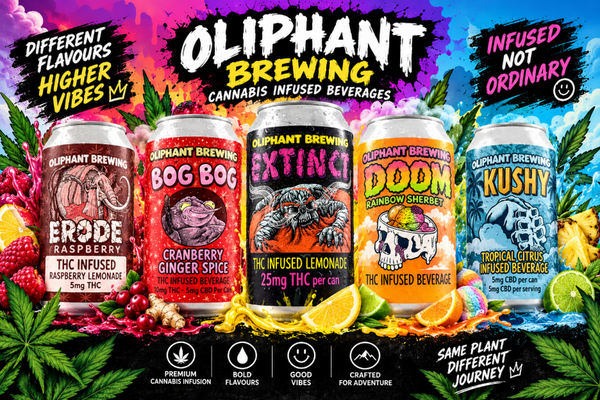
Companies like Oliphant Brewing contribute to the ongoing development of beverage formulation science and production systems within the industry ecosystem.
For further information or inquiries related to beverage development you can contact us.
Frequently Asked Questions
Q1: What is THC seltzer formulation?
It is the process of creating carbonated THC-infused beverages using emulsification and beverage science principles. It involves combining cannabinoids with water-based systems in a way that ensures stability, consistent dosing, and a smooth sensory experience across every serving.
Q2: Why is THC emulsion quality important?
It ensures even distribution, stability, and consistent dosing. High emulsion quality also helps prevent separation over time, improves shelf life, and supports predictable absorption, which is essential for maintaining product reliability and consumer trust.
Q3: What is cannabis beverage formulation?
It is the broader science of creating stable infused drinks using cannabinoids. This includes selecting compatible ingredients, designing emulsification systems, balancing flavor profiles, and ensuring that the final beverage remains stable under real-world storage and consumption conditions.
Q4: What is beverage R&D THC?
It is the research and development process behind THC beverage creation. This involves experimentation, prototype testing, sensory evaluation, stability analysis, and iterative refinement to achieve an optimized formulation that performs consistently at scale.
Q5: How does the seltzer production process work?
It involves mixing, emulsifying, carbonating, filling, and quality testing. Each step is carefully controlled to maintain consistency, ensure proper infusion of THC, preserve carbonation levels, and verify that every batch meets safety and quality standards before distribution.
Q6: Why are nanoemulsions preferred?
They offer better stability, clarity, and faster absorption. Nanoemulsions also improve bioavailability by reducing particle size significantly, allowing cannabinoids to disperse more evenly in the beverage and remain stable throughout shelf life.